Introduction to HIPEC Surgery
HIPEC surgery is an advanced treatment for abdominal cancers. HIPEC stands for Hyperthermic Intraperitoneal Chemotherapy. In this procedure, doctors use heated chemotherapy directly in the abdomen. This method targets cancer cells more effectively than standard treatments. Many people with abdominal cancer look for new options. Therefore, HIPEC surgery is gaining attention as a promising choice. According to the World Health Organization (WHO), new cancer treatments like HIPEC can improve outcomes for some patients.
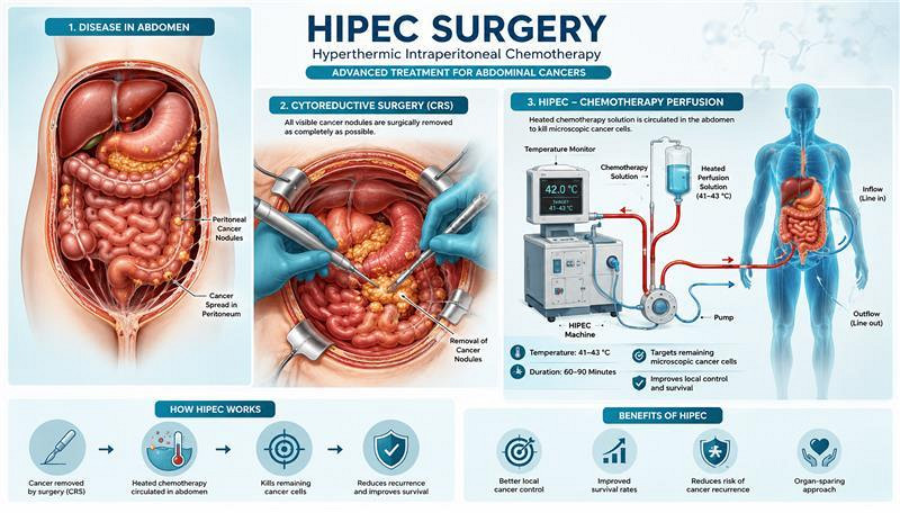
How HIPEC surgery works — from disease in the abdomen to cytoreductive surgery and heated chemotherapy perfusion.
Symptoms and Types of Abdominal Cancers Treated with HIPEC
Abdominal cancers can cause many symptoms. However, signs often depend on the type and stage of cancer. Early detection is important for better results. HIPEC surgery is used for several abdominal cancers, especially when cancer spreads inside the abdomen.
- Ovarian cancer
- Colorectal cancer (cancer of the colon or rectum)
- Appendiceal cancer (cancer of the appendix)
- Stomach cancer
- Peritoneal mesothelioma (cancer of the lining of the abdomen)
Common symptoms include:
- Abdominal pain or swelling
- Unexplained weight loss
- Changes in bowel habits
- Feeling full quickly
- Nausea or vomiting
But, these symptoms can also be caused by other conditions. So, it is important to see a doctor if you notice any of them.
Causes and Risk Factors
Abdominal cancers can develop for many reasons. Some causes are not fully understood. However, certain risk factors can increase your chances. For example, family history plays a role. In addition, lifestyle choices matter.
- Family history of cancer
- Smoking or heavy alcohol use
- Obesity
- Poor diet low in fruits and vegetables
- Chronic infections or inflammation
- Exposure to certain chemicals
While you cannot change some risk factors, you can control others. Therefore, healthy habits may help lower your risk.
How HIPEC Surgery Works (Procedure Overview)
HIPEC surgery combines two steps. First, doctors remove visible tumors from the abdomen. This is called cytoreductive surgery (CRS). Next, they deliver heated chemotherapy directly into the abdominal cavity. The chemotherapy is warmed to about 42°C (108°F). This heat helps kill cancer cells more effectively. The medicine circulates in the abdomen for 60 to 90 minutes. After that, doctors remove the fluid and close the incision.
HIPEC is now increasingly performed using minimally invasive techniques as well, including laparoscopic or robotic approaches, without the need for large incisions. This can mean a smaller surgical footprint and, for suitable patients, a more comfortable recovery.
Because HIPEC targets cancer cells directly, it can reduce side effects compared to regular chemotherapy. Yet, it is a complex procedure. Only trained cancer specialists should perform HIPEC surgery for abdominal cancer.
Diagnosis and Patient Selection
Not everyone with abdominal cancer is a candidate for HIPEC surgery. Doctors use several tests to decide if HIPEC is right for you. These include:
- Physical exam and medical history
- Blood tests
- Imaging scans (CT, MRI, or PET)
- Biopsy (removing a small tissue sample)
After reviewing your results, your cancer team will discuss advanced cancer treatment options. They will consider your overall health, cancer type, and how far it has spread. Sometimes, HIPEC is used when cancer has not spread outside the abdomen.
Benefits and Potential Risks of HIPEC
HIPEC surgery offers several benefits. For example, it delivers high doses of chemotherapy right where it is needed. This can help kill more cancer cells. Also, because the medicine stays in the abdomen, there are fewer side effects in other parts of the body.
Benefits include:
- Improved cancer control in the abdomen
- Fewer side effects compared to standard chemotherapy
- Better quality of life for some patients
However, HIPEC is a major surgery. Like all surgeries, it has risks. These may include:
- Infection
- Bleeding
- Kidney or liver problems
- Digestive issues
- Blood clots
Therefore, it is important to talk with your doctor about the risks and benefits. The Centers for Disease Control and Prevention (CDC) recommends discussing all treatment options with your care team.
Recovery and Aftercare
Recovery after HIPEC surgery takes time. Most people stay in the hospital for one to two weeks. During this time, doctors watch for any problems. You may need help with eating and moving at first. After leaving the hospital, you will need regular check-ups. These visits help your doctor track your progress and spot any issues early.
To recover well, follow your care team’s advice. Eat healthy foods, stay active as allowed, and take medicines as prescribed. If you notice any new symptoms, call your doctor right away. With good aftercare, many people return to normal activities in a few months.
Prevention and Lifestyle Tips
While not all abdominal cancers can be prevented, healthy habits can lower your risk. For example, you can:
- Eat a balanced diet rich in fruits and vegetables
- Exercise regularly
- Maintain a healthy weight
- Avoid smoking and limit alcohol
- Get regular check-ups
In addition, knowing your family history can help you and your doctor watch for early signs. Early detection often leads to better outcomes.
Frequently Asked Questions
Is HIPEC surgery safe?
HIPEC is generally safe when performed by experienced doctors. However, like all surgeries, it has risks.
How long does HIPEC surgery take?
The entire procedure can last 6 to 12 hours, including tumor removal and chemotherapy.
Will I need other treatments after HIPEC?
Sometimes, doctors recommend more chemotherapy or other therapies after HIPEC. Your care team will guide you.
Can HIPEC cure abdominal cancer?
If cytoreductive surgery (CRS) is done adequately, achieving CC-0 status — meaning all visible disease is removed — adding HIPEC can help cure some advanced abdominal malignancies. In other cases, HIPEC helps control cancer and often improves quality of life, even if it does not lead to a complete cure.
What should I ask my doctor?
Ask about your treatment options, possible side effects, and what to expect during recovery.
For more information, consult trusted health resources and discuss your treatment options with an experienced specialist. Consult Dr. Anshul Verma, a cancer specialist, for expert evaluation, personalized guidance, and to understand whether HIPEC surgery is the right treatment option for you.