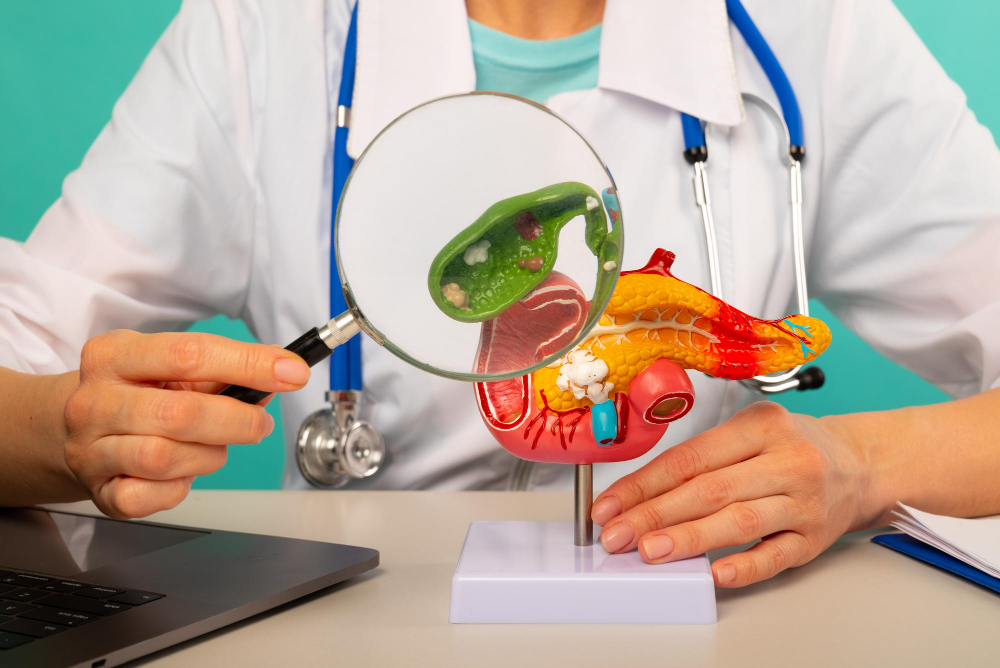
What is Cholangiocarcinoma? Understanding Bile Duct Cancer
Cholangiocarcinoma is a rare cancer that starts in the bile ducts, the small tubes that carry bile from the liver to the small intestine to help digest fats. Since bile duct cancer may grow silently in its early stages, symptoms are often noticed only when the tumour affects bile flow.
Cholangiocarcinoma can develop in different locations:
- Intrahepatic cholangiocarcinoma: Cancer that starts inside the liver’s bile ducts.
- Extrahepatic cholangiocarcinoma: Cancer that develops in the bile ducts outside the liver.
Early diagnosis plays an important role in determining suitable treatment options and improving outcomes.
Symptoms of Bile Duct Cancer
Early signs of cholangiocarcinoma can be difficult to identify. Symptoms often appear when the tumour blocks the bile ducts.
Common symptoms may include:
- Yellowing of the skin or eyes (jaundice)
- Itchy skin
- Dark urine
- Pale stools
- Pain in the abdomen, especially the right upper side
- Unexplained weight loss
- Fever or chills
- Loss of appetite
Since these symptoms can occur due to several conditions, proper medical evaluation is important for accurate diagnosis.
Causes and Risk Factors
The exact cause of cholangiocarcinoma is not always known. However, certain conditions and exposures may increase the risk of developing bile duct cancer.
Risk factors include:
- Chronic liver diseases such as hepatitis B or hepatitis C
- Bile duct disorders such as primary sclerosing cholangitis
- Certain parasitic infections, especially liver fluke infections caused by parasites such as Opisthorchis viverrini and Clonorchis sinensis
- Family history of bile duct cancer
- Exposure to certain toxins and chemicals, including thorotrast (thorium dioxide), nitrosamines, and industrial chemicals such as vinyl chloride
Even with these risk factors, many people diagnosed with cholangiocarcinoma may not have an identifiable cause.
Diagnosis of Cholangiocarcinoma
Doctors use a combination of clinical evaluation, blood tests, and imaging techniques to diagnose bile duct cancer.
Diagnostic methods may include:
- Ultrasound: Helps identify abnormalities in the liver and bile ducts.
- CT Scan: Provides detailed images to assess the tumour location and spread.
- MRI and MRCP (Magnetic Resonance Cholangiopancreatography):
- A specialised type of MRI that provides detailed images of the bile ducts and helps evaluate blockages or abnormalities.
- FAPI PET Scan:
- An advanced imaging technique that may help assess tumour activity and spread in selected cases.
- Biopsy:
- In some situations, a tissue sample may be collected to confirm the diagnosis.
Accurate staging helps doctors decide the most suitable treatment approach.
Treatment Options for Cholangiocarcinoma
Treatment for cholangiocarcinoma depends on the tumour location, stage, and overall health of the patient.
Surgery: The Main Treatment Approach
Surgery remains the primary treatment option for eligible patients with resectable cholangiocarcinoma.
Extrahepatic Cholangiocarcinoma:
Treatment may involve:
- Surgical removal (excision) of the affected bile duct
- Liver resection in selected cases depending on tumour involvement
Intrahepatic Cholangiocarcinoma:
Treatment mainly involves:
- Liver resection (removal of the affected part of the liver) when possible
Liver Transplantation:
- Liver transplant may be considered in selected patients with specific conditions and treatment criteria.
Additional Treatment Approaches
Depending on the individual case, doctors may recommend additional therapies.
Chemotherapy and Immunotherapy
- Chemotherapy may be used to control cancer growth or as part of a combined treatment approach.
- Immunotherapy may be considered in selected patients depending on tumour characteristics and treatment suitability.
Radiation Therapy
Radiation may be used in certain situations to help control tumour growth or manage symptoms.
Palliative Treatment for Advanced Cholangiocarcinoma
When surgery is not possible and symptoms need relief, supportive treatments may be used.
Options may include:
- EBRT (External Beam Radiation Therapy) or SBRT (Stereotactic Body Radiation Therapy) in selected patients with inoperable symptomatic disease
- PTBD (Percutaneous Transhepatic Biliary Drainage) or ERCP-guided biliary drainage to relieve blockage-related jaundice
These approaches aim to improve comfort, manage symptoms, and maintain quality of life.
Prevention and Lifestyle Tips
Not all cases of cholangiocarcinoma can be prevented. However, maintaining liver health may help reduce certain risks.
Helpful measures include:
- Preventing hepatitis B and hepatitis C infection
- Getting hepatitis B vaccination
- Avoiding excessive alcohol consumption
- Maintaining a balanced diet
- Managing overall liver health
- Seeking medical advice for chronic liver or bile duct conditions
Awareness of symptoms can also help encourage earlier evaluation.
Conclusion
Cholangiocarcinoma is a rare but serious cancer affecting the bile ducts. Since early symptoms may be difficult to recognise, signs such as jaundice, dark urine, itching, abdominal pain, or unexplained weight loss should not be ignored.
Accurate diagnosis through advanced imaging and specialised evaluation helps determine the most appropriate treatment approach. Surgery remains the main treatment option for eligible patients, while chemotherapy, immunotherapy, radiation therapy, and supportive procedures may be used depending on individual cases.
If you notice persistent symptoms related to your liver or bile ducts, consult Dr. Anshul Verma for expert evaluation, diagnosis, and personalised treatment guidance.
CTA:
Concerned about liver or bile duct-related symptoms? Consult Dr. Anshul Verma for specialised evaluation and personalised guidance for cholangiocarcinoma and other hepatobiliary conditions.